Showing posts with label Traditional. Show all posts

Sunday, 20 December 2015

Bihu girls - Ragazze Bihu - बिहू युवतियाँ

Students, Science college Guwahati, Assam, India

Guwahati, Assam, India: Students from the science and technology college doing the traditional Bihu dance.

गुवाहाटी, असम, भारतः विज्ञान तथा तकनीकी कॉलेज की छात्राओं का पराम्परिक बिहू नृत्य.

Guwahati, Assam, India: Le studentesse della scuola delle scienze durante la danza tradizionale Bihu.

***

Sunday, 6 December 2015

Balance - Bilancio - संतुलन

Hojagiri dancers, Tripura, India - Images by Sunil Deepak

Tripura, India: In the traditional Hojagiri dance, maintaining the body balance is very important.

त्रिपुरा, भारतः पाराम्परिक होजागिरी नृत्य में शारीरिक संतुलन बनाये रखने का बहुत महत्व है.

Tripura, India: Nella danza tradizionale Hojagiri (Hogiaghiri), mantenere l'equilibrio del corpo è molto importante.

***

Thursday, 3 December 2015

Horses & elephants - Cavalli e elefanti - घोड़े व हाथी

Tribal deity Tubraj's shrine from Guajarat, India - Images by Sunil Deepak

Gujarat, India: Tubraj hill has the shrine where tribal groups of Bhil and Garsiya pray to Tubraj and offer him horses and elephants of terracotta, and sacrifice goats. This re-creation of Tubraj shrine is at Manas museum in Bhopal and is the work of tribal artists Madhabhai Jethabhai Punja and Vitthalbahi Punja.

गुजरात, भारतः तुबराज पहाड़ी पर भील तथा गरसिया लोग बावसी तुबराज को पूजते हैं और उन्हें मिट्टी के घोड़े व हाथी चढ़ाते हैं, तथा बकरे की बलि देते हैं. तुबराज पूजा स्थल का भोपाल के मानस संग्रहालय में यह चित्रण आदिवासी कलाकार माधाभाई जैठाभाई पूँजा तथा विट्ठलभाई पूँजा द्वारा निर्मित है.

Gujarat, India: La collina di Tubraj ha il luogo sacro dove i gruppi tribali Bhil e Garsiya venerano Tubraj e gli offrono cavalli e elefanti di terracotta, insieme al sacrificio delle capre. Tutto è stato ricreato al museo Manas di Bhopal dagli artisti tribali Madhabhai Jethabhai Punja e Vitthalbahi Punja.

***

Tuesday, 24 November 2015

Red ribbons - Nastri rossi - लाल रिब्बन

Folk dancers from Dima Hsiao, Assam, India - Images by Sunil Deepak

Assam, India: Folk dancers from Dima Hsiao district with red ribbons on their heads.

असम, भारतः दीमा ह्स्याओ जिले के सिर पर लाल रिब्बन बाँधे लोक नर्तक.

Assam, India: Danzatori tradizionali dal distretto di Dima Hsiao con i nastri rossi sulle loro teste.

***

Friday, 20 November 2015

Traditional dresses - Costumi tradizionali - पाराम्परिक वस्त्र

Folk dancers, Romania - Images by Sunil Deepak

Romanian folk dancers in traditional costumes at the world Expo in Milan.

मिलान में अंतर्राष्ट्रीय एक्सो में रोमेनिया के लोक नर्तक अपनी पाराम्परिक पौशाकों में.

Danzatori folkloristici con i vestiti tradizionali all'Expo di Milano.

***

Saturday, 7 November 2015

Karbi girls - Ragazze Karbi - कारबी नवयुवतियाँ

Folk-dancers, Karbi Anglong, Assam, India - Images by Sunil Deepak

Assam, India: Young women from Karbi Anglong district, at a folk dance festival.

असम, भारतः कारबी अँगलाँग जिले से एक लोक नृत्य समारोह में भाग लेने आयी कुछ नवयुवतियाँ.

Assam, India: Ragazze dal distretto di Karbi Anglong, ad un festival delle danze popolari.

***

Friday, 9 October 2015

Folk theatre - Teatro popolare - लोक नाटक

Play Sati Behula by Gunakar Das Goswami, Assam, India - Images by Sunil Deepak

Assam, India: Some scenes of the folk theatre "Sati Behula" by Assamese director Gunakar Das Goswami.

असम, भारतः असमिया नाटककार गुणाकर दास गोस्वामी के लोक नाटक "सति बेहुला" के कुछ दृश्य.

Assam, India: Alcune scene del treatro popolare "Sati Behula" del regista assamese Gunakar Das Goswami.

***

Sunday, 27 September 2015

Lover boy - Ragazzo amante - प्रेमी युवक

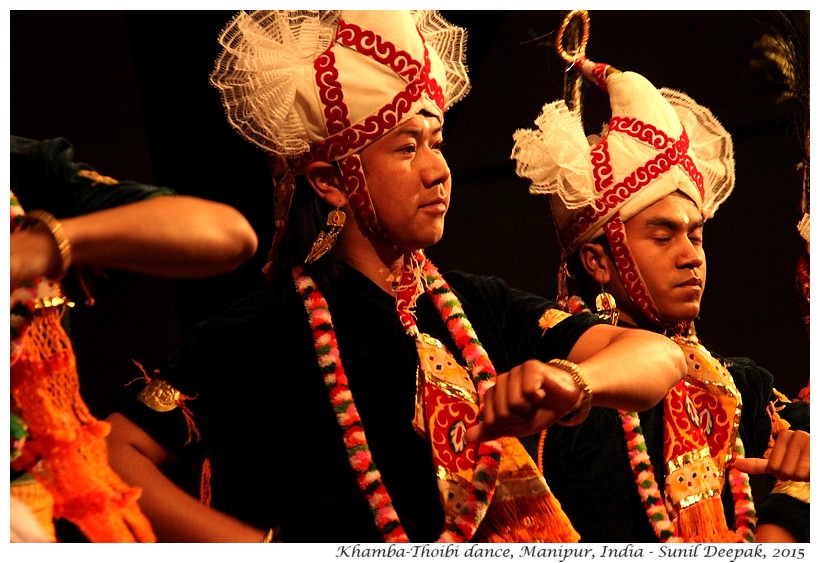
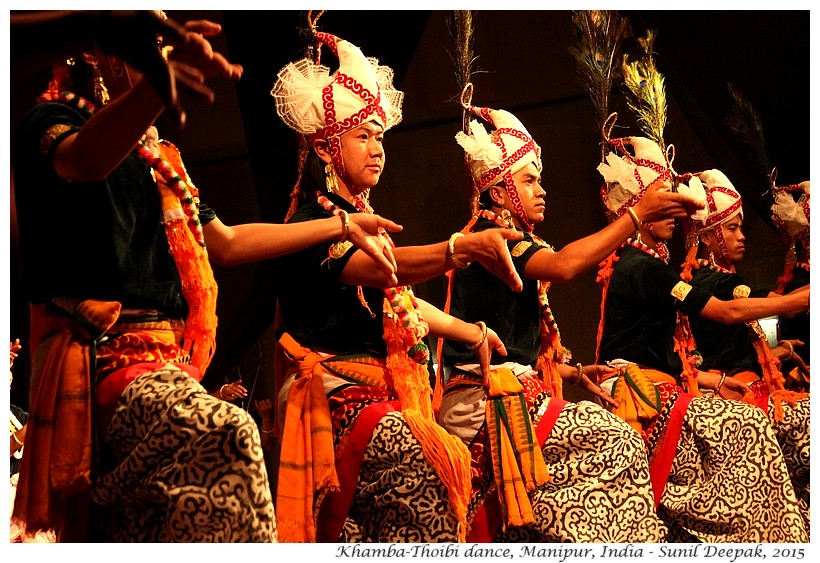
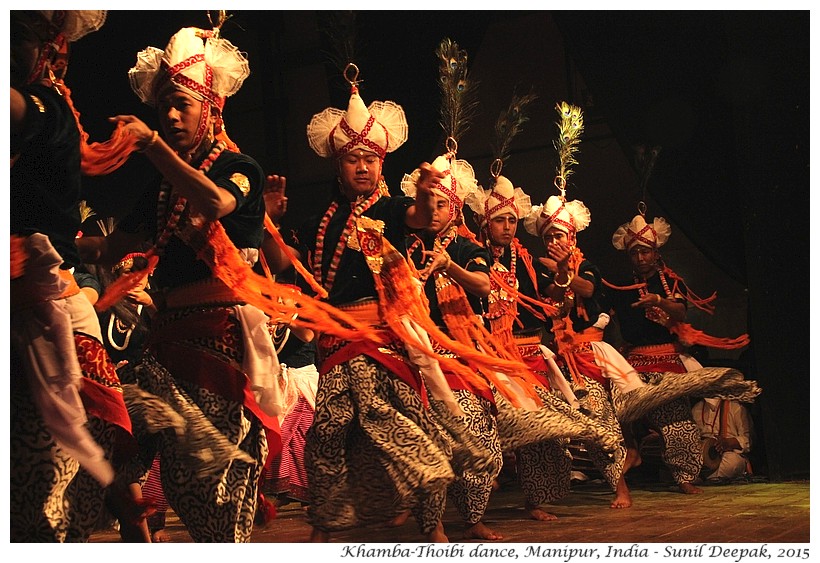
Khmba-Thoibi folkdance, Manipur, India - Images by Sunil Deepak

The Manipuri folk-dance "Khamba-Thoibi" tells the tragic love story of Khamba and Thoibi. They are married after overcoming a lot of difficulties. However, Khamba wants to test his wife's love. He puts on a disguise and tries to force himself on Thoibi. Afraid and angry, she kills him with a spear. Today's pictures show the beautiful costumes of the boys in this dance.

मणिपुर के खम्बा-थोईबी लोकनृत्य में खम्बा और थोईबी की दुखद प्रेमकथा है. बहुत कठिनाईयों के बाद उनका मिलन होता है. लेकिन खम्बा अपनी प्रेमिका के प्रेम की परीक्षा लेना चाहता है. वह भेष बदल कर आता है और थोईबी से जबरदस्ती प्रेम करने की कोशिश करता है. डरी और क्रोधित थोईबी उसे अपने भाले से मार देती है. आज की तस्वीरों में इस नृत्य में युवकों की सुन्दर पौशाकें.

La danza popolare del Manipur, "Khamba-Thoibi" presenta la tragica storia d'amore tra Khamba e Thoibi. Si sposano dopo molte diffcoltà. Ma Khamba vuole verificare l'amore della sua moglie. Si traveste e poi cerca di forzarsi sulla ragazza. Impaurita e arrabbiata lei l'uccide con una lancia. Le immagini di oggi mostrano i belli costumi portati dai ragazzi in questa danza.

***

Thursday, 3 September 2015

Dancing friends - Amiche danzatrici - नृत्य सखियाँ

Mising women's dancing group, Assam, India -Images by Sunil Deepak

Assam, India: Persons of the Mising tribe live mostly in upper Assam. Today's images have some young women from a Mising dance group.

असम, भारतः मिसिन्ग जनजाति के अधिकतर लोग उत्तरी असम में रहते हैं. आज के चित्रों में एक मिसिन्ग नृत्य गुट की कुछ नवयुवतियाँ.

Assam, India: Le persone della tribù Mising vivono nella parte nord dello stato di Assam. Le immagini di oggi hanno alcune giovani donne da un gruppo di danza Mising.

***

Friday, 28 August 2015

Yoga dance - Danza yoga - योग नृत्य

Dancers, Khetri, Assam, India - Images by Sunil Deepak

Assam, India: Many of the folk-dances of India show movements similar to those of the Yoga exercises. Today's images have a traditional dance by young men from Khetri in Assam, where they show off their body-strength and flexibility, while the inspiration from Yoga is clearly visible.

असम, भारतः भारत के बहुत से लोकनृत्यों में योगासनों से प्रेरित मुद्राएँ दिखती हैं. आज की तस्वीरों में असम के खेत्री क्षेत्र से नवयुवकों का पारम्परिक नृत्य जिसमें शरीर की शक्ति तथा लचीलापन दोनों का प्रदर्शन है, और योगासनों की प्रेरणा भी स्पष्ट है.

Assam, India: Molte danze folkloristiche dell'India presentano movimenti simili ad alcuni esercizi dello yoga. Le immagini di oggi hanno una danza tradizionale da Khetri in Assam, dove i ragazzi giovani mostrano la forza e la flessibilità dei corpi, mentre l'influenza dello yoga si vede chiaramente.

***

Wednesday, 26 August 2015

King's moustaches - Baffi del re - राजा की मूँछें

Actors makeup, Bhaona traditional theatre, Majuli, Assam, India - Images by Sunil Deepak

Majuli, Assam, India: In the traditional Bhaona theatre, in the scene of Sita's wedding, many kings come wishing to marry her. An actor playing the role of one of those kings gets ready for the scene while his moustaches are fixed.

माजुलि, असम, भारतः पाराम्परिक भाओना नाटक में सीता के स्वयंवर वाले दृष्य में बहुत से राजा सीता से विवाह करने की इच्छा ले कर आते हैं. उन्हीं में से एक राजा का भाग निभाने वाले अभिनेता की तैयारी के दौरान उनकी मूँछें लगायी जा रही हैं.

Majuli, Assam, India: Nel teatro tradizionale Bhaona, nella scena del matrimonio di Sita, molti re vengono con la speranza di sposarla. Un attore che fa la parte di uno dei re si prepara per la scena mentre fissano i suoi baffi.

***

Friday, 21 August 2015

Ethnic market - Mercato etnico - पाराम्परिक पौशाक बाज़ार

Miao ethnic dress market, Wenshan, Yunnan, China - Images by Sunil Deepak

Wenshan, Yunnan, China: The market of Miao people's ethnic dresses worn during marriages. Apart from south Yunnan, Miao people are also present in north Myanmar and in Arunachal Pradesh and Nagaland states in north-east India.

वेनशान, युन्नान, चीनः मिआओ जनजाति की विवाह के समय पहनी जाने वाली पाराम्परिक पौशाकों का बाज़ार. मिआओ जनजाति के लोग युन्नान के दक्षिण भाग के साथ साथ, उत्तरी मयनमार (बर्मा) तथा भारत में अरुणाचल प्रदेश व नागालैंड में भी रहते हैं.

Wenshan, Yunnan, Cina: Il mercato dei vestiti etnici da portare durante i matrimoni dei popoli Miao. A parte il sud dello Yunnan, i popoli Miao vivono anche nel nord della Birmania e negli stati di Arunachal Pradesh e Nagaland nel nord-est dell'India.

***

Sunday, 16 August 2015

Story-tellers - Racconta storie - कथाकार

Singers-musicians of Bhaona traditional theatre, Majuli, Assam, India - Images by Sunil Deepak

Majuli, Assam, India: The traditional theatre Bhaona presents the stories of Ram and Krishan written by 16th century social and religious reformer Srimanta Shankerdev. In this theatre all the roles are played by men. Theatre starts with Sattriya men who sing the story accompanied by the beats of their drums and this part is called "Gayan Bayan". Today's images have the Sattriya story tellers of Bhaona theatre.

माजुलि, असम, भारतः भाओना पाराम्परिक नाटकों में राम तथा कृष्ण की कहानियों का चित्रण होता है, जिन्हें सोलहवीं शताब्दी में असमिया धर्मसुधारक श्रीमन्त शंकरदेव ने लिखा था. इन नाटकों में केवल पुरुष अभिनेता होते हैं. नाटक का प्रारम्भ करते हैं सत्रिया युवक जो ढोलक की थाप के साथ कथा को गा कर सुनाते हैं, इस हिस्से को "गायन बायन" कहते हैं. आज की तस्वीरों में बाहोना नाटक के सत्रिया कथाकार हैं.

Majuli, Assam, India: Il teatro tradizionale Bhaona presenta le storie di Ram e Krishna scritte dal riformatore sociale e religioso Srimanta Shankerdev nel 16° secolo. Tutti gli attori di questo teatro sono maschi. Il teatro è iniziato da un gruppo di uomini Sattriya che cantano la storia accompagnati dal battito dei loro tamburi e questa parte si chiama "Gayan Bayan". Le immagini di oggi hanno questi racconta storie Sattriya del teatro Bhaona.

***

Sunday, 9 August 2015

Naga decorations - Decorazioni Naga - नागा सजावट

Traditional art at Naga Murungs, Kisama, Nagaland, India - Images by Sunil Deepak

Kisama, Nagaland, India: With time our ways of thinking and sensibilities change. What had seemed good in the past, may seem inappropriate today. I had somewhat similar feelings when I saw the decorations in some traditional Naga community houses (Murungs). The heads of the enemies adorning the wall, entry steps shaped like a woman and the warrior with the gun welcoming the guests, may feel a little strange today.

किसामा, नागालैंड, भारतः समय के साथ हमारी सोच व संवेदना बदल जाती हैं. पुराने समय में जो बात सही लगती थी, वह आज के वातावरण में गलत लगने लगती है. कुछ ऐसा ही लगा कुछ पुराने नागा जनजातियों के पाराम्परिक घरों को देख कर. घर की दीवार पर लगे दुश्मनों के कटे सिर, नारी के आकार में बनी घर की सीढ़ियाँ और हाथ में बन्दूक लिए यौद्धा से घर में आने वालों का स्वागत, आज कुछ अटपटा सा लग सकता है.

Kisama, Nagaland, India: Con tempo, i nostri modi di pensare e le nostre sensibilità possono cambiare. Quello che sembrava giusto in passato, oggi ci può sembrare inopportuno. Ho avuto sensazioni così quando ho visito le decorazioni su alcune case comunitarie tradizionali (i murung) dei Naga. Le teste mozzate dei nemici, le scale di casa fatte nella forma di una donna o il guerriero con il fucile per dare il benvenuto in casa possono sembrare un po' strane oggi.

***

Saturday, 1 August 2015

Horn music - Musica delle corna - सींग नाद

The horn blowers, Kisama, Nagaland, India - Images by Sunil Deepak

Nagaland, India: "The Naga Heritage Park" of Kisama has a small stadium where the cultural events of the Hornbill festival are organized. On the two sides of the entry gate to the stadium, there are two statues of Naga men blowing buffalo horns to welcome the guests. They are the subjects of today's images.

नागालैंड, भारतः किसामा के "साँस्कृतिक जननिधि पार्क" में एक छोटा सा स्टेडियम है जहाँ होर्नबिल फेस्टिवल के दौरान साँस्कृतिक कार्यक्रमों का आयोजन होता है. स्टेडियम के प्रवेश द्वार के दोनो ओर भैंसे के सीगों से स्वागत-ध्वनी करने वाले युवकों की मूर्तियाँ हैं, जो आज की छवियों का विषय हैं.

Nagaland, India: "Il parco del patrimonio Naga" di Kisama ha un piccolo stadio dove si organizzano gli eventi culturali del festival di Hornbill. All'entrata dello stadio, ai due lati vi sono le statue di giovani Naga che suonano le corna di buffalo per dare il benvenuto agli ospiti. Sono loro il soggetto delle immagini di oggi.

***

Friday, 31 July 2015

Naga houses - Case Naga - नागा घर

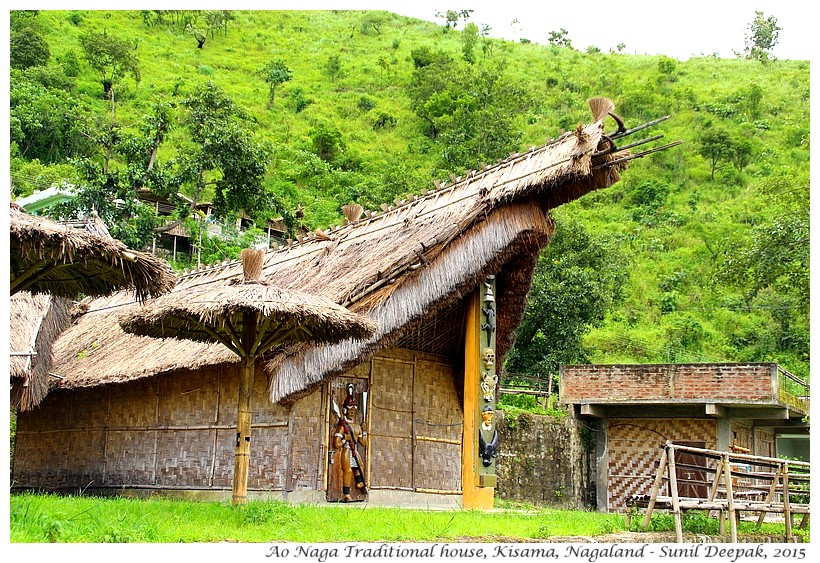
Ao tribe traditional Naga house, Kisama, Nagaland, India - Images by Sunil Deepak
Sumi tribe traditional Naga house, Kisama, Nagaland, India - Images by Sunil Deepak
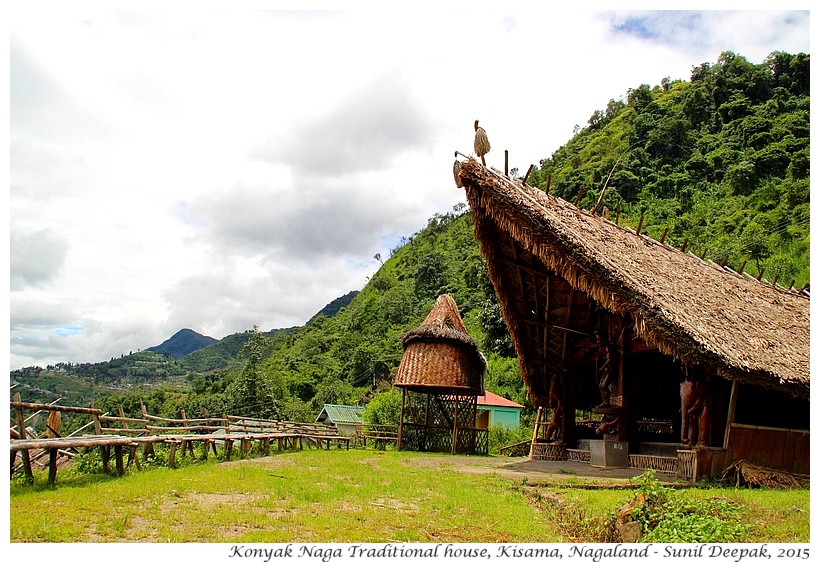
Konyak tribe traditional Naga house, Kisama, Nagaland, India - Images by Sunil Deepak

Nagaland, India: Kisama is on the way from Kohima to Imphal. Here every year in the beginning of December they organise the "Hornbill festival". Kisama presents the traditional houses of different Naga tribes. Today's images show community houses (Morungs) of Ao, Sumi and Konyak tribes. Moon and star outside the Sumi house made me think of how somethings get "branded" - when I see moon and star, my first thought is about Islam religion. The traditional Naga houses also reminded me of a journey in Tana Toraja in South Sulawezi island of Indonesia. The shapes and decorations of the houses, using the heads of buffaloes, organisation of feasts, the tradition of head hunting of enemies, in many ways Toraja seem similar to Naga traditions. It is said that ancestors of Bali people in Indonesia were persons from Odisha, perhaps the Toraja ancestors were Naga people?

नागालैंड, भारतः कोहिमा से इम्फाल जाने वाले रास्ते पर किसामा है जहाँ हर वर्ष दिसम्बर के प्रारम्भ में "होर्नबिल फेस्टिवल" का आयोजन होता है. किसामा में विभिन्न नागा जनजातियों के पाराम्परिक घर दिखाये गये हैं. आज की तस्वीरों में आओ, सूमी तथा कोनयाक जनजातियों के घर हैं. सूमी घर के बाहर चाँद और तारे के चिन्ह को देख कर सोचा कि किस तरह से कुछ छवियाँ ब्राँड की तरह से किसी विषेश वस्तु से जुड़ जाती हैं - चाँद और तारे को साथ देखो तो सबसे पहले मन में इस्लाम धर्म का विचार आता है. नागा पाराम्परिक घरों को देख कर मुझे इन्दोनेशिया के दक्षिण सुलावेज़ी द्वीप में ताना तोराजा की याद आ गयी. घरों की बनावट व सजावट, बाहर भैंसों के सिर, समारोहों का आयोजन, दुशमनों के सिर काटने की परम्परा, बहुत सी बातों में तोराजा और नागा मिलते हैं. कहते हैं कि इन्दोनेशिया के बाली द्वीप के पूर्वज भारत में ओडिशा से गये थे. क्या यह हो सकता है कि ताना तोराजा के पूर्वज नागा हों?

Nagaland, India: Kisama è sulla strada tra Kohima e Imphal. Qui ogni anno al inizio di dicembre si organizza il "Hornbill festival". Kisama presenta le case comunitarie (Morung) tradizionali delle diverse tribù Naga. Le immagini di oggi hanno le case tradizionali delle tribù Ao, Sumi e Konyak. Quando ho visto la luna e la stella sulla casa Sumi ho pensato a come certe cose si legano con una cosa particolare - quando vedo la luna e la stella, il mio primo pensiero è della religione Islamica. Le case tradizionali Naga mi hanno fatto pensare anche a Tana Toraja nell'isola di Sud Sulawesi in Indonesia. La forma delle case e gli addobbi, l'uso delle teste di bufale, come si organizzano le feste, la tradizione di tagliare le teste dei nemici, in molte cose i Toraja e i Naga si assomigliano. Si dice che gli antenati degli abitanti di Bali erano persone indiane di Odisha, forse i Naga erano gli antenati dei Toraja?

***

Wednesday, 22 July 2015

Rose tower - Torre di Rosa - गुलाब मीनार

Tower of St Rose, Expo 2015, Milan, Italy - Images by Sunil Deepak

Milan, Italy:World Expo 2015 has a "Rose tower" inspired from the 750 years old tradition of Viterbo, a town situated to the south of Rome. Every September, 100 persons of Viterbo carry "the tower of St Rose", which is the 90 feet (28 metres) tall and weighs 50 tons, on their shoulders in the city streets. The tower has many angels, lions and a lot of roses. This tradition reminds me of the "Jagganath yatra" of Puri in India.

मिलान, इटलीः विश्व एक्स्पो 2015 में रोम के दक्षिण में स्थित वितेर्बो नाम के शहर की एक 750 वर्ष पुरानी प्रथा से प्रेरित "गुलाब मीनार" है.  हर वर्ष सितम्बर में वितेर्बो के 100 व्यक्ति, 90 फुट उँची 50 टन की "संत रोज़ की मीनार" को कँधे पर शहर में घुमाते हैं. मीनार में देवदूत, शेर, आदि के साथ साथ बहुत सारे रोज़ (गुलाब) के फ़ूल भी लगे हैं. यह प्रथा मुझे भारत में पुरी की जगन्नाथ यात्रा जैसे लगती है.

Milano, Italia: Expo 2015 ha una "torre di Rosa" ispirato dalla tradizione di Viterbo, a sud di Roma, che dura da 750 anni. In ogni settembre, 100 persone di Viterbo, portano la torre di Santa Rosa, che è alta 28 metri e pesa 50 tonellate, sulle loro spalle nelle vie della città. Oltre agli angeli e leoni, la torre è addobata con tanti fiori di rosa. Questa tradizione mi ricorda il Jagganath Yatra a Puri in India.

***
Related Posts Plugin for WordPress, Blogger...

Followers