Showing posts with label Kohima. Show all posts

Tuesday, 11 August 2015

Blue tower - Torre azzurra - नीली मीनार

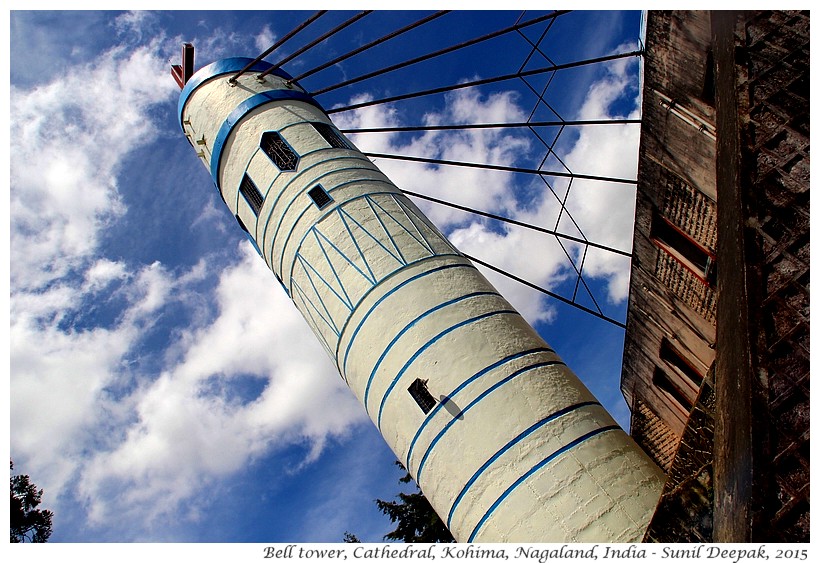
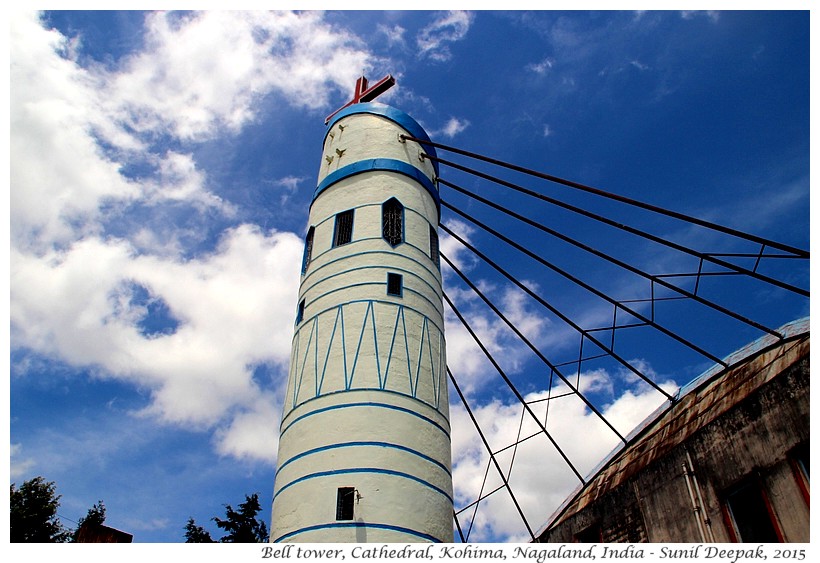
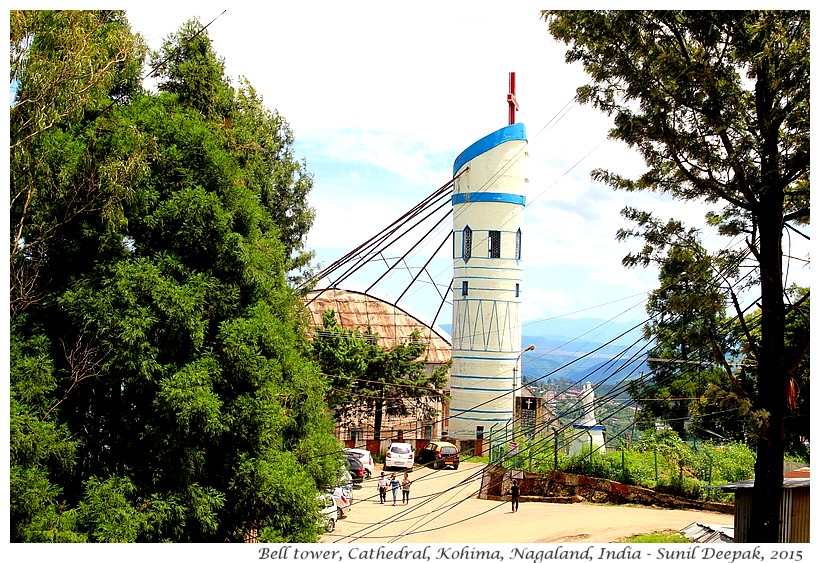
Bell tower, Cathedral, Kohima, Nagaland, INdia - Images by Sunil Deepak

Kohima, Nagaland, India: The bell tower of the cathedral of Kohima is white with sky-blue designs. When I had seen it together with the cathedral it had reminded me of the periscope of a submarine. However looked at separately it makes me think of the fairytale tower where Barbablue had imprisoned the princess with the long hairs. The princess had put her hair out of the tower window and the prince who had come to save her, had caught them and climbed up. What does this tower makes you think of?

कोहिमा, नागालैंड, भारतः कोहिमा के कैथेड्रल के घँटाघर की मीनार सफ़ेद रंग की है जिस पर आसमानी रंग की आकृतियाँ बनी हैं. कैथेड्रल के साथ देखा था तो मुझे लगा था कि वह किसी पनडुब्बी का पेरीस्कोप है. पर ऐसे देखो तो लगता है कि यह बच्चों की कहानी वाली मीनार है जहाँ पर बारबाब्लू ने लम्बे बालों वाली राजकुमारी को कैद किया था. राजकुमारी ने अपने बाल खिड़की से बाहर फ़ैलाये थे और उसे बचाने आया राजकुमार उन बालों को पकड़ पर ऊपर चढ़ गया. आप को यह मीनार किस बात की याद कराती है?

Kohima, Nagaland, India: La torre del campanile del cattedrale di Kohima è bianca con dei disegni in azzurro. Quando l'avevo visto insieme al cattedrale, avevo pensato al periscopio di un sottomarino. Invece visto così, mi fa pensare alla torre di Barbablu delle fiabe dove lui aveva imprigionato la principessa con i capelli lunghi. La principessa aveva messo i suoi capelli fuori dalla finstra e il principe venuto a salvarla, si era aggrappato a quelli per salire sulla torre. A voi che cosa fa in venire in mente questa torre?

***

Monday, 10 August 2015

Two & a half statues - Due e mezzo statue - ढाई मूर्ति

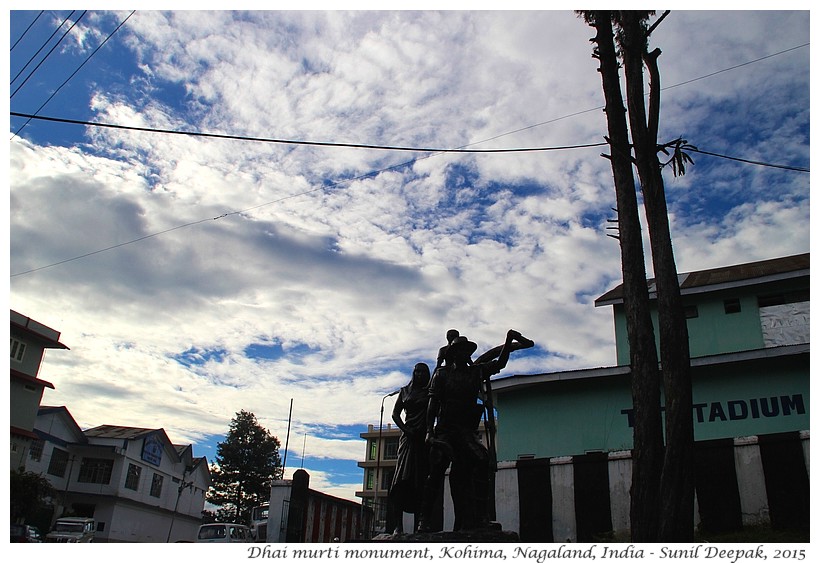
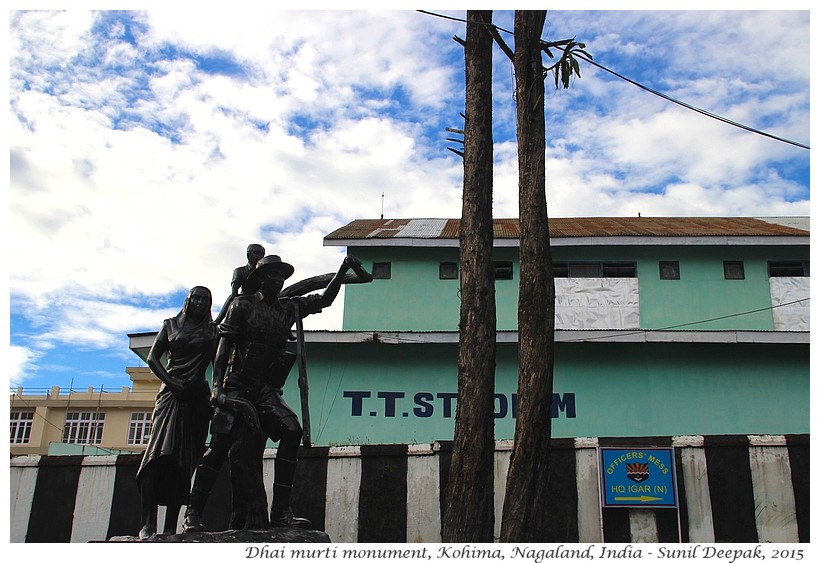
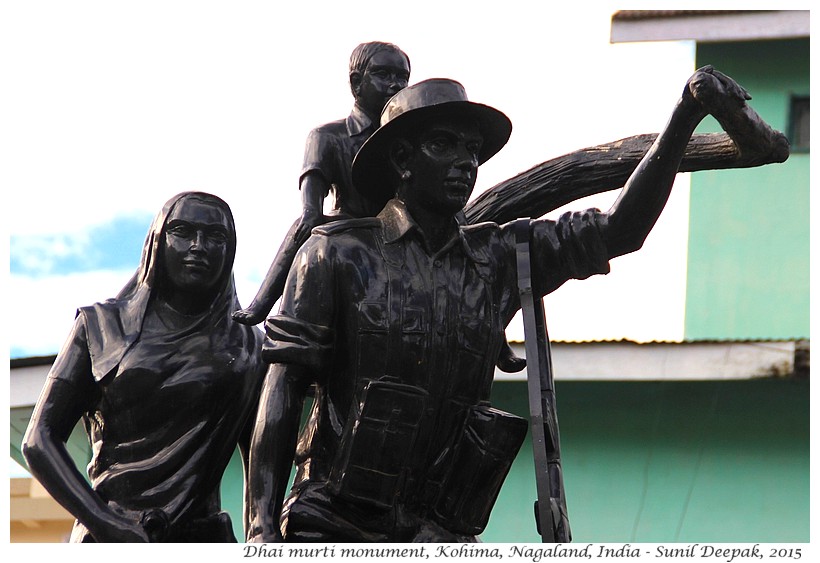
Burma refugee monument, Kohima, Nagaland, India - Images by Sunil Deepak

Kohima, Nagaland, India: In the "Two & a half statues" monument of the second world war there are two refugees, a woman and a child, coming from Burma, and a soldier of the Assam Rifles. I hardly know this part of India's history and it raises many questions in my mind.

कोहिमा, नागालैंड, भारतः "ढाई मूर्ति स्मारक" में दूसरे विश्व युद्ध में बर्मा से भारत आने वाली एक नारी और बच्चा शरणार्थी हैं और उन्हें सहारा देने वाला एक असम राइफल का सिपाही है. भारत के इतिहास का यह पृष्ठ मेरे लिए अनजाना सा है और इसके बारे में मेरे मन में कई प्रश्न हैं.

Kohima, Nagaland, India: Nel monumento "Due e mezzo statue" della seconda guerra mondiale vi sono due profughi, una donna e un bambino, che sfuggono dalla Birmania e sono accompagnati da un soldato di Assam Rifles. Non conosco per niente questa parte della storia indiana e mi solleva molte domande in testa.

***

Sunday, 2 August 2015

Naga ship - Nave Naga - नागा जहाज़

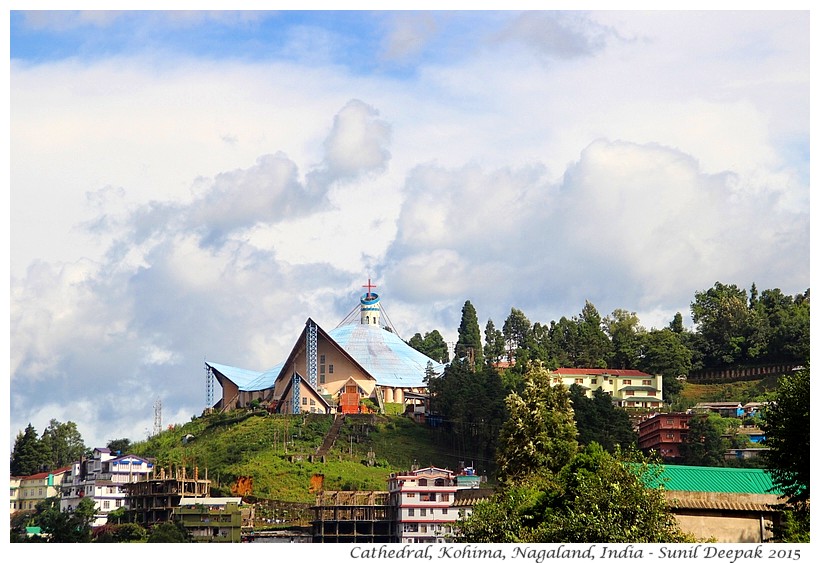
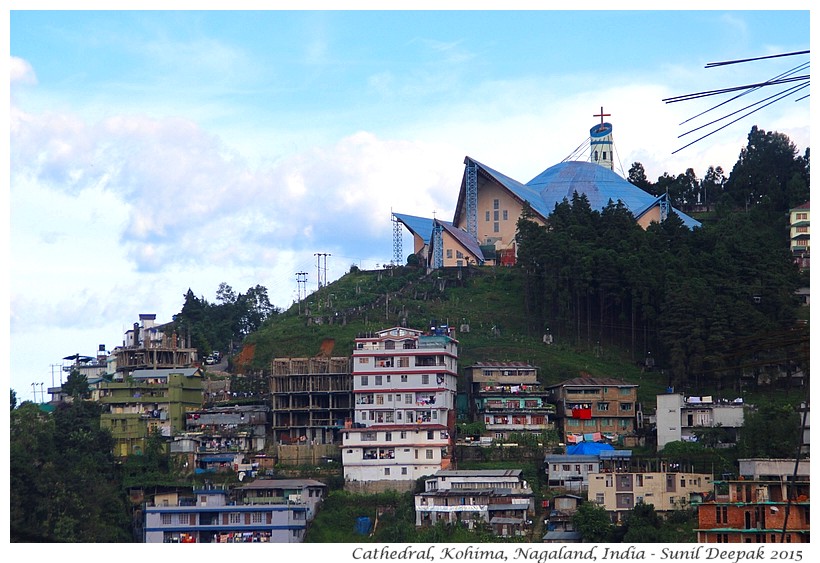
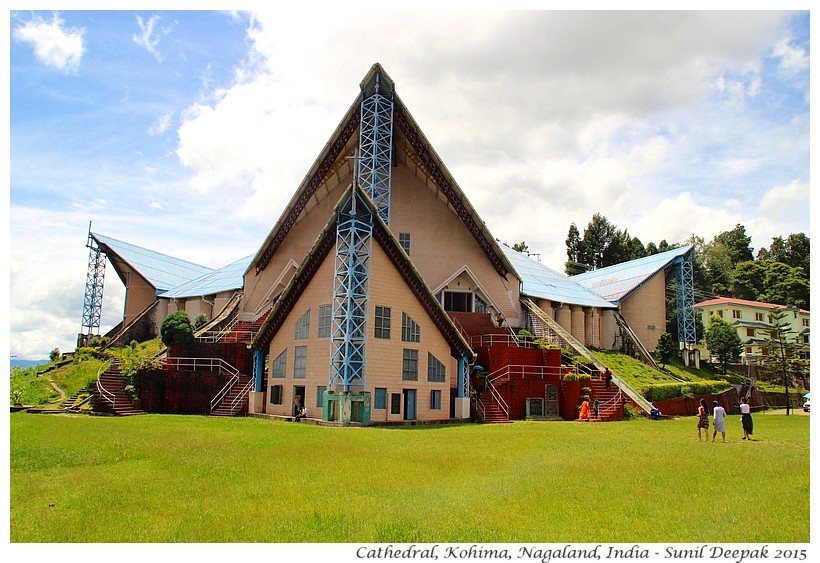
Cathedral, Kohima, Nagaland, India - Images by Sunil Deepak

Kohima, Nagaland, India: The architecture of the Kohima cathedral is a little different. Its roofs are shaped like the traditional Naga houses, like the bow of a ship. Its bell tower seems inspired from the tower of a submarine. The tower is linked to different corners of the roofs as if they are veils of a boat. That is why I am calling it a "Naga ship". Majority of the christians in Nagaland are Baptist protestants but catholics are also significant and this is their cathedral. Built at a corner of the New Ministers' Hill, it is visible from far away.

कोहिमा, नागालैंड, भारतः कोहिमा के कैथेड्रल का वास्तुशिल्प कुछ भिन्न सा है. छतों का आकार पाराम्परिक नागा घरों की छतों जैसा है, जहाज़ के आगे के हिस्से जैसा. पीछे से उसका घँटाघर पानी के नीचे चलने वाली सबमेरीन से प्रेरित है. घँटाघर से तारें छतों के विभिन्न हिस्सों को जोड़ती हैं मानो नाव के पालें हों. इसीलिए मैं उसे "नागा जहाज़" का नाम दे रहा हूँ. वैसे तो नागालैंड बेपटिस्ट तथा अन्य प्रोटैस्टेन्ट ईसाईयों का प्रदेश है पर वहाँ कुछ कैथोलिक ईसाई भी हैं, जिनका यह कैथेड्रल है. नयी मिनिस्टर पहाड़ी के कोने पर बना कैथेड्रल दूर दूर से दिखता है.

Kohima, Nagaland, India: L'architettura della cattedrale di Kohima è un po' diversa. I tetti sono ispirati dalle case tradizionali dei Naga, si assomigliano alla prua di una nave. Il suo campanile sembra la torre di un sottomarino. Il campanile è collegato ai angoli dei tetti con dei fili come fosse dei veli di una nave. Per questo la chiama la "Nave Naga". La maggioranza dei cristiani di Nagaland sono battisti protestanti, ma la presenza cattolica è significativa, testimoniata da questa cattedrale. Costruita su un angolo della collina "New Ministers", è visibile da molto lontano.

***

Wednesday, 29 July 2015

Resting soldiers - Soldati al riposo - सोते सिपाही

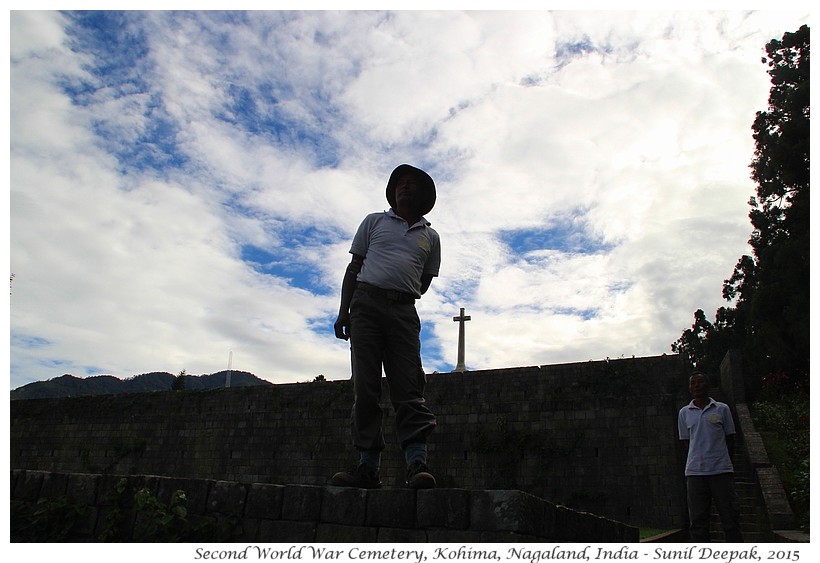
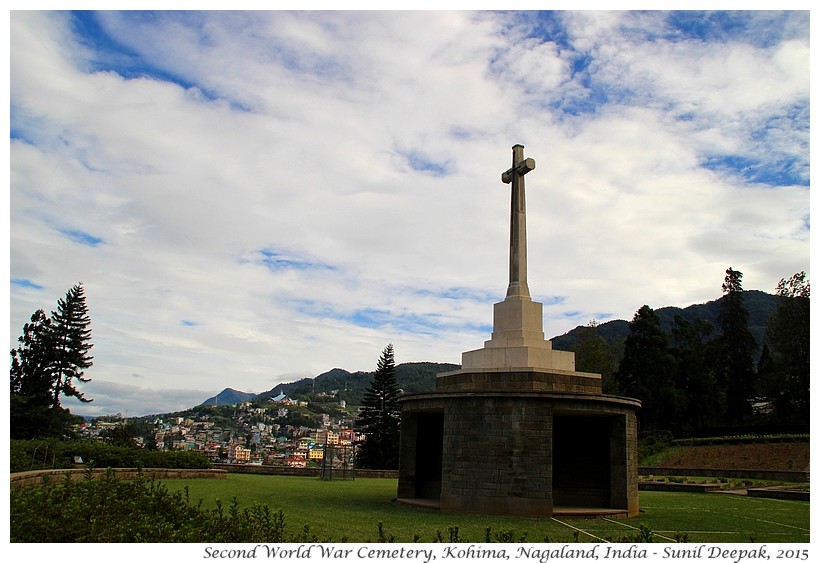
Second world war cemetery, Kohima, Nagaland, India - Images by Sunil Deepak

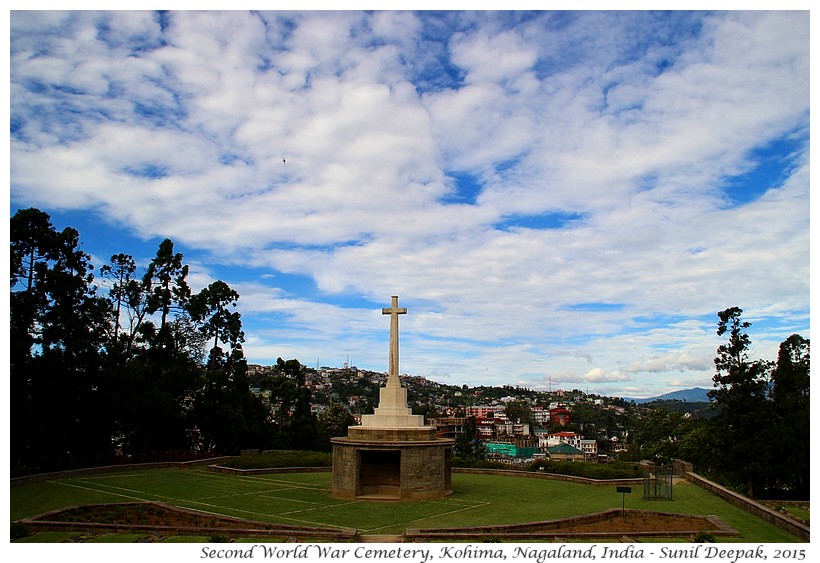
Kohima, Nagaland, India: During the second world war, in 1944 in Kohima there was a fierce battle between the British and Japanese forces. The War Cemetery of Kohima remembers the British soldiers who had died in that battle. Indians were there on both the sides as part of British forces and as the Indian National Army with the Japanese.

कोहिमा, नागालैंड, भारतः 1944 में द्वितीय विश्व महायुद्ध के दौरान कोहिमा में ब्रिटिश तथा जापानी फौजों के बीच घमासान लड़ाई हुई थी.  कोहीमा का "युद्ध कब्रिस्तान" उस लड़ाई में मरे ब्रिटिश सिपाहियों को याद करता है. उस लड़ाई में भारतीय दोनो ओर थे, ब्रिटिश फौज  के सिपाहियों के रूप में और जापानी सिपाहियों के साथ आज़ाद हिन्द फौज के रूप में.

Kohima, Nagaland, India: Durante la seconda guerra mondiale, nel 1944 vi fu una grande battaglia a Kohima fra le forze inglesi e giapponesi. Il cimitero di guerra di Kohima ricorda i soldati inglesi morti durante quella battaglia. Gli indiani facevano parte di entrambe le forze, come parte dei soldati inglesi e come l'armata nazionale indiana con i giapponesi.

***

Monday, 27 July 2015

Mother Kohima - Madre Kohima - कोहिमा माँ

Pieta sculpture, Kohima, Nagaland, India - Images by Sunil Deepak

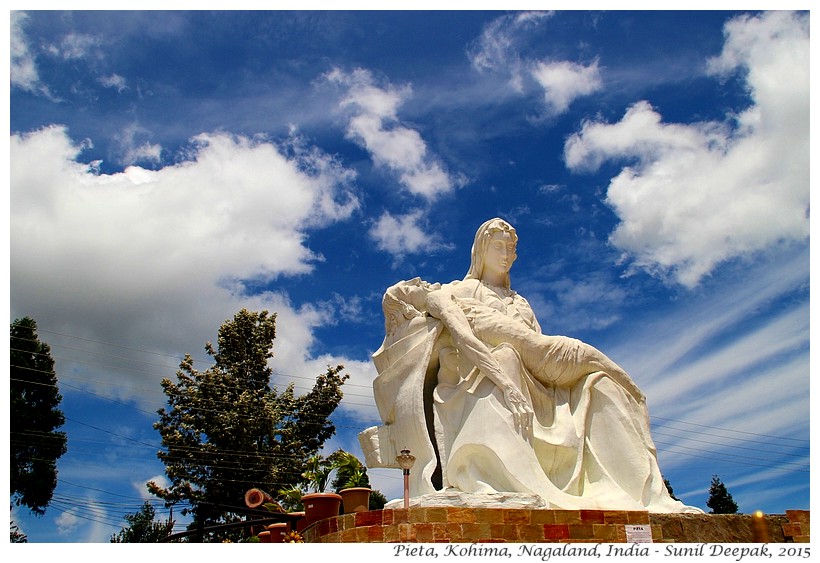
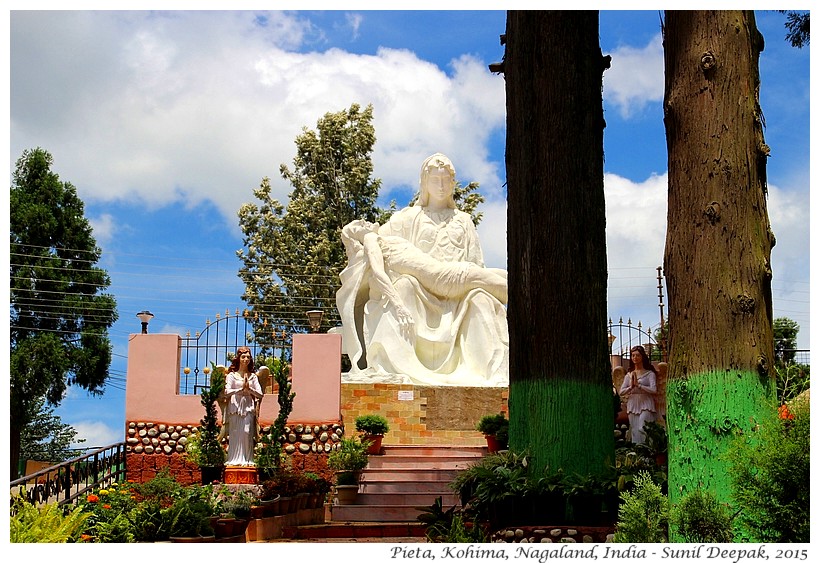
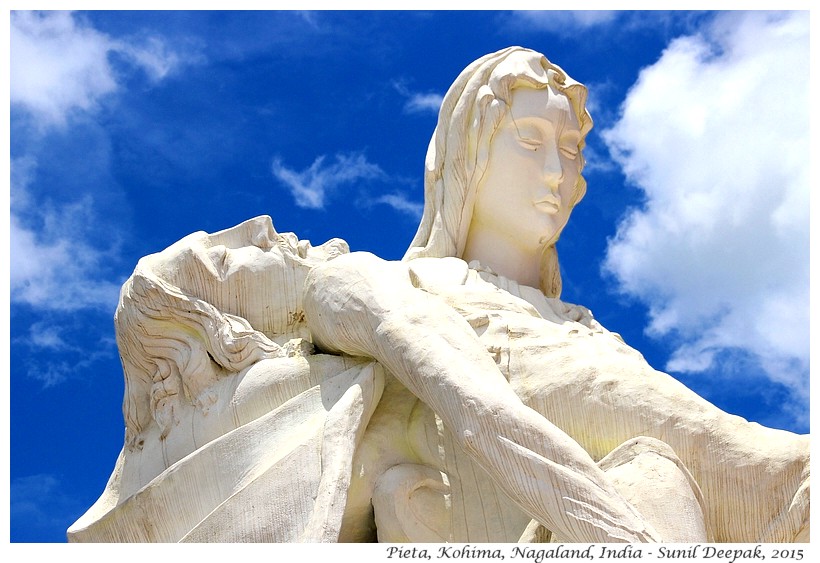
Kohima, Nagaland, India: Sculptor Michaelangelo's "Pieta" (Compassion) is world famous. It has mother Miriam lost in pain holding the dead body of Jesus. Other "Pieta" statues inspired by this sculpture are present in many churches around the world. Some months ago I had presented few examples of those. Yesterday morning I saw Kohima's Pieta, its artist is Shaji Jospeh. This statue is behind the Cathedral of Kohima. About 9 meters high and 6 meters wide, it is supposed to be the largest Pieta in the world.

कोहिमा, नागालैंड, भारतः शिल्पकार माइकल एँजेलो की प्रतिमा "पिइता" (करुणा) जगप्रसिद्ध है. इसमें दर्द में डूबी माँ मिरियम की गोदी में मृत येसू को दिखाया गया है. उससे प्रेरित "पिइता" मूर्तियाँ दुनियाँ के कई गिरजाघरों में हैं. कुछ माह पहले मैंने इसके कुछ उदाहरण प्रस्तुत किये थे. कल सुबह कोहिमा की "पिइता" को देखा जिसे शाजी जोसफ़ ने बनाया है. यह कोहिमा के केथेड्रल के पीछे है. 29 फीट लम्बी तथा 19 फीट चौड़ी यह दुनिया की सबसी बड़ी "पिइता" मूर्ति है.

Kohima, Nagaland, India: La Pietà di Michelangelo è famosa in tutto il mondo e mostra la Madonna addolorata con il corpo di Gesu nelle braccia. Pietà ispirate da questa scultura sono presenti in diverse chiese nel mondo. Alcuni mesi ne avevo presentato alcuni esempi. Ieri mattina ho visto "La Pietà" di Kohima costruita da Shaji Joseph. Questa statua si trova dietro la cattedrale di Kohima. Circa 9 metri alta e circa 6 metri larga, si dice che sia La Pietà più grande del mondo.

***
Related Posts Plugin for WordPress, Blogger...

Followers